Innovative Techniques to Boost Writing Creativity Effectively
Unlocking the Creative Mind
In the fast-paced world of content creation, writers often face the daunting challenge of keeping their ideas fresh and engaging. Creative hobbies like writing serve as an essential outlet, allowing individuals to express their thoughts and emotions. However, the struggle for inspiration can hinder even the most passionate writers from flourishing.
The Importance of Creativity in Writing
Embracing innovation in writing is not just desirable but necessary in today’s competitive landscape. Creative techniques can stimulate original thought, transform blank pages into compelling narratives, and ultimately refine a writer’s craft. By exploring new methods, writers can ignite their imagination and develop their unique voice.
What to Expect
This article will explore the Top 5 innovative techniques that can effectively boost your writing creativity. Each approach has been carefully curated to help you break through mental barriers and elevate your work. Get ready to embark on a journey that challenges your conventional thinking and inspires fresh ideas.
Top 5 Innovative Techniques to Stimulate Creativity in Writing
In the world of writing, creativity can often feel like a fleeting muse, hard to pin down yet essential for producing engaging and dynamic content. Many writers find themselves grappling with writer’s block or repetitive ideas, leaving them yearning for fresh insights and innovative inspiration. However, creativity need not remain elusive when there are numerous inventive techniques available to unblock writers’ imaginations and foster new ideas. This article explores five such techniques, presented in a countdown from fifth to first place, offering unique pathways to enhance creativity in the writing process.
5. Mind Mapping
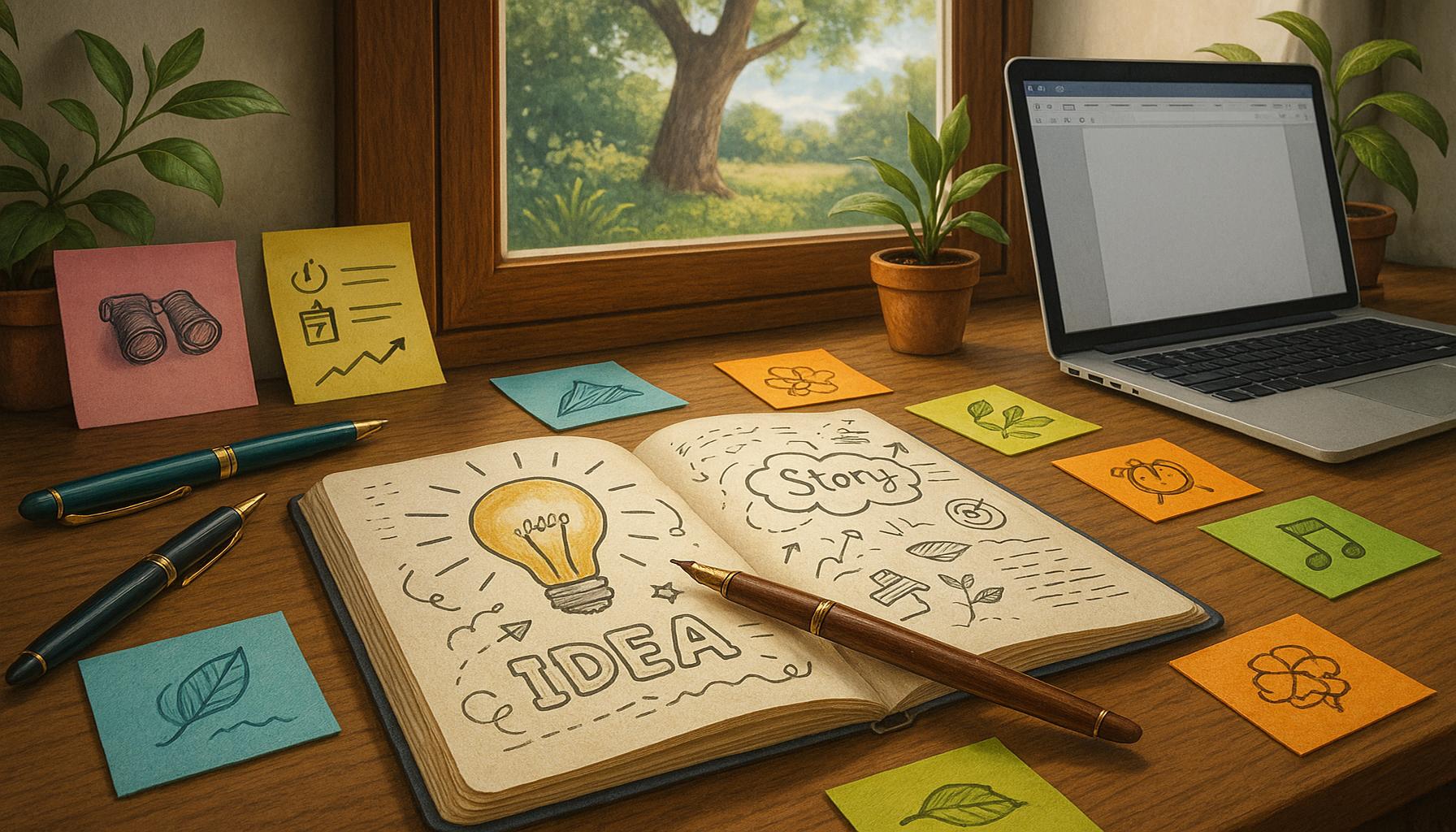
Mind mapping stands as a robust and visually stimulating technique that assists writers in organizing their thoughts. It involves creating an intricate diagram that links ideas, thus enabling writers to visualize relationships and connections between various concepts. This process often leads to new perspectives and brainstorming opportunities that might not have come through linear thinking.

To harness the full potential of mind mapping, consider the following steps:
- Start with a central idea. At the heart of the mind map is the central theme of your project, represented by a word or short phrase. From here, everything branches out.
- Branch out. Allow your thoughts to flow freely as you add subtopics or smaller ideas that connect to the central theme, expanding outward with spokes that represent different contexts or possibilities.
- Use colors and images. Integrate colors, drawings, or symbols, as they not only enhance the appeal of the map but also stimulate different areas of the brain involved in creativity.
Through mind mapping, writers not only organize their thoughts but also engage their brains in unexpected ways. This engagement can lead to enhanced creativity and the emergence of novel ideas, making it a valuable tool for overcoming creative blocks.
4. Writing Prompts
An age-old but effective technique, writing prompts act as catalysts for inspiration. Ranging from a simple word to intricate scenarios, these prompts challenge writers to think outside their conventional frames, urging them towards new creative horizons.
To maximize the benefits of writing prompts, consider employing these strategies:
- Set a timer. Allocate 10-15 minutes to write continuously, fostering a sense of immediacy that aids in bypassing the internal editor.
- Use unusual prompts. Choose prompts that push you beyond your usual themes or styles, encouraging exploration of unconventional settings or perspectives.
- Switch genres. If you primarily write fiction, experiment with non-fiction prompts, or vice versa, to challenge and expand your skill set.
Writing prompts introduce an element of randomness that can disrupt routine thought patterns, opening new avenues of creativity and exploration typically stunted by habitual thinking.
3. Freewriting
Freewriting is a liberating exercise that encourages writing without a specific goal or concern for grammar and style. The primary aim is to permit thoughts to flow unabated, granting the subconscious mind the opportunity to surface and reveal hidden ideas.
For effective freewriting, follow these simple but effective steps:
- Set a timer. Dedicate a period, like 10 to 20 minutes, during which you commit to writing nonstop.
- Start writing. Put pen to paper or fingers to keys, and allow your thoughts to flow in an unedited stream of consciousness.
- Review later. Once the session concludes, sift through your writings for patterns or intriguing ideas that emerge naturally.
This technique is particularly useful in overcoming writer’s block, as it alleviates the pressure to produce refined work and instead fosters a raw, unstructured flow of creativity.
2. Creative Constraints
Paradoxically, imposing constraints can spark exceptional creativity. By setting specific limitations on your writing, such as perspective, word choice, or thematic exclusions, you challenge yourself to think more inventively and explore new directions.
Consider these types of creative constraints:
- Word counts. Challenge yourself with ultra-short stories or flash fiction constrained by limited wordcounts, such as 100 or 500 words.
- Genre limitations. Craft a story in a particular genre while omitting a central theme typical to that genre, like romance without any mention of love.
- Character restrictions. Write from the viewpoint of an inanimate object or non-human entity, imagining the world through a different lens.
By embracing constraints, writers are often propelled into thinking about problems and narratives in novel ways, enriching the overall creative process with a unique twist.
1. Collaborative Writing
Topping the list of innovative techniques is collaborative writing. Engaging with others in the writing process can provide invaluable insights and diverse perspectives, challenging and expanding your creative boundaries.
To dive into collaborative writing, you might:
- Join writing groups. Become an active member in local or online writing communities, where you can share ideas and learn from one another.
- Start a writing round-robin. Write a paragraph and pass the document to another writer to continue, building a story communally.
- Peer reviews. Exchange your outcomes with peers to gain constructive feedback and fresh perspectives, enriching your writing journey.
Collaboration not only diversifies the influx of ideas but fosters motivation and engagement with topics otherwise unexplored. In a communal setting, creativity blooms, leading to richer narratives and strengthened connections.
In conclusion, these innovative techniques provide crucial pathways to unlocking creativity in writing. By incorporating mind mapping, writing prompts, freewriting, creative constraints, and collaboration into your routine, you can broaden your expressive potential, overcome creative barriers, and ultimately enhance the depth and diversity of your storytelling.
| Category | Key Features | Advantages | Disadvantages | Beneficiaries |
|---|---|---|---|---|
| Mind Mapping | Visual representation of ideas to explore connections. | Encourages free thought and may lead to unexpected ideas. | Can become cluttered with too many ideas at once. | Writers seeking to generate and organize thoughts effectively. |
| Daily Writing Prompts | Short, open-ended statements or questions to inspire writing. | Stimulates consistent writing habits and creativity. | Might feel repetitive or forced after a period. | Writers looking to cultivate a daily writing routine. |
| Freewriting | Uninterrupted writing for a set period without concern for grammar or style. | Promotes spontaneous creativity and overcomes writer’s block. | Might produce unrefined work that needs significant editing. | Writers needing to break through mental barriers. |
| Role Reversal | Writing from the perspective of a character, an inanimate object, or even another person. | Enhances empathy and broadens narrative understanding. | Can lead to a disconnection from the author’s voice. | Writers looking to develop character depth and voice. |
Engaging with these techniques stimulates not only a writer’s imagination but also provides a structured way to explore creativity. As writers delve deeper into each category, they unlock new avenues of self-expression that enhance their storytelling capabilities. Whether through the visual mapping of ideas, the discipline of daily writing, or the uninhibited nature of freewriting, the potential to revolutionize one’s writing journey becomes apparent. Techniques like role reversal push boundaries, inviting writers to experience narratives through fresh lenses, leading to richer, more complex stories. Therefore, writers embracing such innovative approaches continually discover powerful tools to amplify their creative potential.
Frequently Asked Questions on Innovative Techniques to Stimulate Writing Creativity
What are some innovative techniques to enhance creativity in writing?
There are several cutting-edge methods that writers can adopt to boost creativity, such as mind mapping, which helps organize ideas visually, and the use of random word generators that push the mind to make unique connections. Additionally, techniques like freewriting, where writers continuously jot down thoughts without worrying about structure, are gaining popularity for their ability to unlock creative potential.
How does environment influence creative writing?
The environment plays a crucial role in stimulating writing creativity. A space that is clutter-free and filled with calming elements, such as plants or art, can significantly enhance focus and imagination. Moreover, some writers find inspiration in various settings by changing their writing locations, ranging from libraries to serene outdoor spots, to break monotony and offer fresh perspectives.
Can technology aid in enhancing writing creativity?
Technology can be a powerful ally in the creative process. Tools like brainstorming apps and collaborative platforms allow writers to interact with others and gather diverse insights. Furthermore, artificial intelligence-driven applications help to generate prompts or even analyze writing styles, offering new angles to explore creative ideas.
Is it possible to train oneself to be more creative?
Absolutely! Like any skill, creativity can be nurtured and developed over time. Regular practice and challenge-based writing exercises are effective ways to stretch creative muscles. Setting aside dedicated time to explore new genres or storytelling techniques also helps. The key lies in maintaining a persistent and open-minded approach towards experimenting with ideas.
How can collaborative writing boost individual creativity?
Collaborative writing introduces diverse perspectives and encourages dialogue that can spark unique ideas. Working with others exposes writers to different writing styles and thought processes, fostering an environment where creativity thrives. By sharing feedback and building on each other’s suggestions, collaborative projects can lead to enhanced individual creative output.
Conclusion: Unlocking the Power of Innovative Writing Techniques
In the captivating journey of exploring innovative techniques to stimulate creativity in writing, we have uncovered a treasure trove of strategies that break traditional boundaries and invite a more dynamic writing process. Key takeaways from this exploration include the utilization of freewriting to unshackle thoughts from the constraints of perfection, and mind mapping to visualize and organize ideas in a way that encourages unexpected connections.
Furthermore, we delved into the power of environmental change, finding inspiration in nature or bustling urban landscapes, and the importance of engaging the senses to evoke more vivid and compelling narratives. Another pivotal technique discussed was the role of collaborative storytelling, where shared creativity fuels innovation, offering new perspectives and insights. Lastly, the integration of technology, from AI writing assistants to digital storytelling platforms, represents a frontier for expanding creative horizons in writing.
The Importance of Creativity in Writing
These innovative techniques underscore the importance of creativity as both a process and an outcome in the realm of writing. They highlight how pivotal it is for writers—be they novices or seasoned professionals—to continually seek out and embrace new methods of expression. In the context of creative hobbies, writing serves not only as a medium for expression but also as an avenue for introspection and personal growth.
As we conclude, let this exploration serve as a reminder of the boundless potential that awaits those who dare to innovate and experiment with their writing. By nurturing creativity through various techniques, writers can unlock new realms of imagination, ultimately enriching their creations and engaging readers in fresh and compelling ways.

Linda Carter
Linda Carter is a writer and creative hobbies expert specializing in crafting, DIY projects, and artistic exploration. With extensive experience helping individuals discover their creative potential and bring their ideas to life, Linda shares her knowledge on our platform. Her goal is to empower readers with practical tips, inspiring ideas, and step-by-step strategies for success in the world of creative hobbies.