Visual Journaling: Incorporating Art and Drawing into Your Notes
The Art of Combining Visuals with Learning
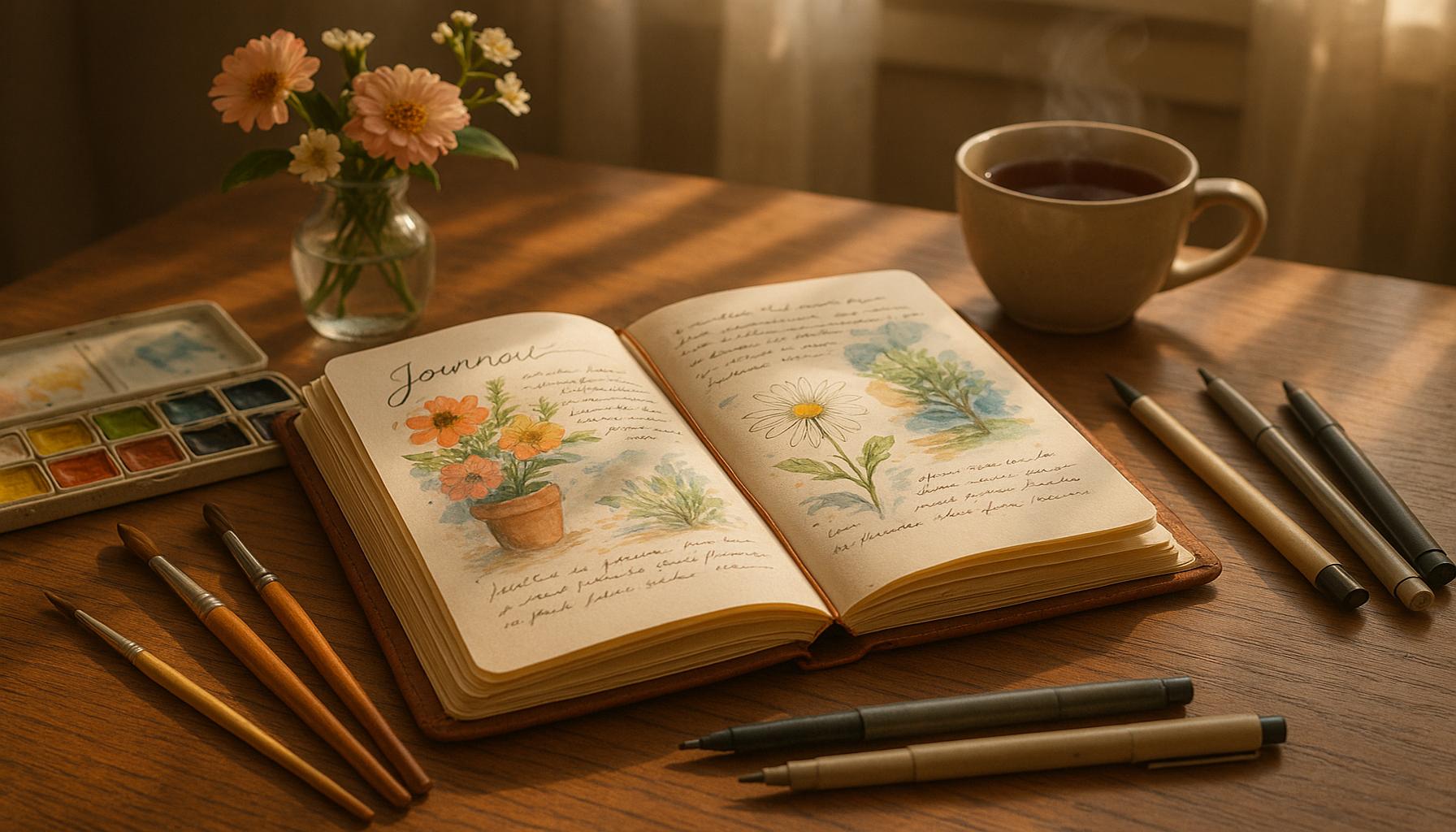
Visual journaling effectively combines the worlds of art and note-taking, paving the way for a more dynamic learning experience. By merging sketches, doodles, and vibrant colors with written notes, individuals can significantly enhance both their retention and creativity.
This method holds several compelling benefits:
- Improved Memory: Research has shown that visual elements can trigger memory recall more effectively than text alone. For instance, studies indicate that people are more likely to remember information when it’s presented alongside relevant images. By using diagrams, graphs, or even simple illustrations, learners can create mental “mind maps” that make complex information more accessible.
- Enhanced Focus: Engaging with art keeps the mind attentive during lectures or meetings. Instead of passively listening, participants who doodle or add visuals to their notes are often more engaged and less likely to drift off. This active involvement can lead to deeper understanding and retention of the material being discussed.
- Therapeutic Release: Drawing and painting offer a form of relaxation, significantly reducing stress while learning. Many individuals find that the act of creating leads to a meditative state, where the mind can process information more freely and creatively.
Artists and educators alike are embracing this innovative approach. From enhancing a student’s classroom experience to aiding professionals in the corporate world, the versatility of visual journaling is captivating various audiences. In schools across the country, teachers are encouraging their students to incorporate visual journaling techniques into their studies to boost engagement and comprehension. Similarly, businesses are recognizing the value of visual strategies in fostering creativity and collaboration during brainstorming sessions.
Many have discovered that integrating art into their notes transforms mundane content into a stimulating format. For instance:
- Adding visuals to lecture notes can clarify complex concepts, such as using flowcharts to depict processes or timeline graphics to represent historical events.
- In brainstorming sessions, incorporating sketches or doodles can spark new ideas, encouraging participants to think outside the box and break free from conventional thinking patterns.
- Daily reflections, often enhanced by visual journaling, can nurture self-discovery and emotional processing, allowing individuals to explore their thoughts and feelings in a creative and constructive way.
As you dive deeper into the world of visual journaling, you’ll uncover techniques that can significantly enhance your note-taking and artistic skills. Techniques such as mind mapping, zentangle, and color coding can further enrich your learning experience. Are you ready to explore a new dimension of creativity in your learning journey? The fusion of art and academia offers endless possibilities—so grab your pencils, paints, or digital tools, and start crafting your visual journal today!
DISCOVER MORE: Click here to learn how art can enhance your well-being
Unlocking Creative Potential through Visual Techniques
As the demand for innovative learning strategies grows, visual journaling stands out as a powerful tool that merges creativity with education. This technique not only appeals to artistic sensibilities but also aligns with how our brains process information. By transforming traditional notes into vibrant visual expressions, learners can foster a more engaging and productive study environment.
Understanding the Mechanics of Visual Journaling
At its core, visual journaling is about harnessing the power of imagery to complement written text. It fits effortlessly into various learning contexts, from classrooms to workshops, and corporate meetings to personal reflections. By embracing this approach, you can tap into the innate human attraction to visuals. Studies indicate that the brain is wired to respond to images up to 60,000 times faster than text, highlighting the potential for improved comprehension and retention.
A Few Techniques to Get Started
Incorporating art into your notes doesn’t have to be daunting. Here are several techniques that can help you ease into the practice of visual journaling:
- Mind Mapping: This technique enables learners to organize thoughts visually. By starting with a central idea and branching out into subtopics, you create a web of information that illustrates relationships and hierarchies.
- Doodle Notes: Rather than maintaining strict lines, injecting doodles and small illustrations next to key points can enhance memory retention while making the process enjoyable. This makes revisiting notes less of a chore and more of an invitation to explore.
- Color Coding: Use color to categorize themes, highlight important points, or denote hierarchy in information. Colors can evoke emotions and foster engagement, helping your notes become visually stimulating maps of information.
- Zentangle: This form of drawing involves creating intricate patterns and designs to promote relaxation and focus. Integrating zentangle into your notes can fuel creative thinking during study periods, ultimately aiding in a deeper understanding of the subject matter.
Learning Beyond Text
Visual journaling transcends conventional study methods, opening doors to diverse learning styles. For visual learners, this approach can be particularly advantageous, as it aligns with their natural tendencies to visualize information. As educators and professionals alike continue to explore its efficacy, they are discovering that creating rich, visual notes not only makes information more digestible but also allows for personal expression. Individuals are increasingly encouraged to personalize their learning experiences, making them more relevant and meaningful.
In essence, visual journaling is not just about pretty pictures or artistic flair—it’s an integrative approach that welcomes creativity into the often rigid structures of learning and note-taking. As you experiment and develop your own visual journaling skills, you’ll likely find that this method encourages not just retention but also an enjoyment of the learning process itself. So, why not take the plunge? Engage with your content in a new, innovative way and discover just how transformative your note-taking can be when you bring art into the mix!
| Advantages | Key Insights |
|---|---|
| Enhanced Memory Retention | Integrating art and drawing can improve recall, as the brain connects visual elements with concepts. |
| Increased Creativity | Visual journaling fosters innovation and allows for the exploration of new ideas, making learning more engaging. |
| Emotional Expression | Art serves as a powerful outlet for emotions, helping individuals articulate feelings that may be difficult to verbalize. |
| Flexible Learning Tool | Visual journaling adapts to various learning styles, appealing to visual thinkers and enhancing inclusivity. |
Incorporating art and drawing into note-taking, known as **visual journaling**, not only enhances memory retention but also increases creativity and emotional expression. By visually mapping thoughts, learners can access deeper levels of understanding and engagement. This skill can transform traditional learning environments, facilitating collaborative projects and artistic interpretation. Embracing visual journaling promotes versatile learning paths, ensuring that insights resonate beyond the page, influencing how knowledge is constructed and shared in educational settings. This method encourages individuals to harness their artistic potential while engaging with information in innovative ways. Ultimately, visual journaling invites everyone to explore their relationship with learning, making it a worthwhile journey of self-exploration and artistic achievement.
DISCOVER MORE: Click here to dive into painting techniques
Enhancing Academic Performance through Visual Methods
As more educators adopt visual learning strategies, the positive effects of visual journaling on academic performance are becoming increasingly evident. Research has shown that students who integrate artistic techniques into their study practices often report higher engagement levels, improved retention rates, and a deeper understanding of material. The potential benefits are not limited to students; professionals and lifelong learners can reap similar rewards by transforming how they record and absorb information.
The Science Behind Visual Learning
The brain’s affinity for visual information is not just a personalized preference—it’s backed by science. Cognitive psychology identifies a phenomenon known as the “dual coding theory,” which suggests that information is better retained when it’s presented both verbally and visually. When engaging with content through visual journaling, learners encode information in multiple ways. For example, seeing a diagram alongside written notes can help facilitate connections between concepts that might otherwise seem disparate.
Diverse Applications Across Fields
The applications of visual journaling extend beyond student life. In fields like science, business, and the arts, professionals are increasingly using visual notes to stimulate creativity and innovation. For scientists, sketching diagrams or flow charts during brainstorming sessions can clarify complex processes. In business environments, visual journaling can manifest as journey maps or infographics that depict customer experiences, aiding in strategic discussions and decision-making. In contrast, artists often use visual journaling to document inspiration, merging text with imagery to capture the essence of their ideas.
Individualization and Personal Growth
One of the most appealing aspects of visual journaling is its inherent flexibility. Each individual’s journal can reflect their personal style and learning preferences. For instance, a student may choose to focus on sketching, while a corporate professional may prefer a combination of visuals and bullet points. This tailoring provides a sense of ownership; learners can engage with material in a manner that feels genuine, thereby promoting a deeper connection with the content.
Collaborative Learning and Sharing Ideas
Visual journaling also fosters collaborative environments, wherein individuals can share their artistic notes with peers. This sharing can spark discussions, inspire new ideas, and facilitate group learning. In academia, study groups can benefit from each member’s visual notes, while in workplace settings, teams can combine their individual journals into larger collaborative projects. This exchange not only enriches the learning experience but also nurtures a sense of community among learners.
The Transformative Power of Visual Journaling
Ultimately, visual journaling is not merely an artistic endeavor; it is a transformative learning strategy that empowers individuals to reinterpret information creatively. Whether you’re a student delving into complex theories, a professional aiming to streamline ideas, or a hobbyist documenting your thoughts, incorporating art into your notes can reshape your engagement with content. By embracing this creative outlet, you open new avenues for understanding, innovation, and personal expression—an inviting transformation into your learning journey.
DISCOVER MORE: Click here to enhance your creative productivity
Conclusion: Unlocking New Dimensions in Learning
In today’s fast-paced world, the integration of visual journaling into note-taking practices presents an exciting avenue for enhancing understanding and retention. As we have explored, the blend of art and information not only leverages the brain’s natural preference for visual stimuli but also fosters a more engaging learning environment. From students grasping complex theories to professionals strategizing through creative visuals, the versatility of this method is profound.
The ability to customize journals allows individuals to cultivate their unique learning styles, providing a sense of ownership that transforms the educational experience. By encouraging a fusion of drawings, diagrams, and text, visual journaling enables learners to connect concepts more deeply and think critically about information. Furthermore, the collaborative aspect of sharing visual notes enriches discussions and fosters a supportive community, revolutionizing traditional learning dynamics.
As the practice continues to gain traction across various fields, it beckons a re-examination of conventional study techniques. Educators, business leaders, and creatives alike should consider embracing visual journaling as a powerful tool that not only enhances personal growth but also inspires innovation. By making this artistic approach an integral part of their learning journeys, individuals can unlock new dimensions of insight, creativity, and motivation. Therefore, take the plunge—grab that sketchbook or digital tool—and start visualizing your thoughts today. The possibilities for growth and exploration are endless.
Related posts:
Creative Ideas to Transform Your Journaling into Artistic Inspiration
Creative Journaling: Incorporating Arts and Illustrations to Express Emotions
Transforming Journaling into a Practice of Gratitude: Ideas for Cultivating Positivity
Journaling for Developing Writing Skills: Practices and Tips
Dream Journaling: Techniques for Creatively Recording and Interpreting Your Dreams
Exploring Journaling Therapy: How Daily Writing Can Improve Your Emotional Well-Being

Linda Carter is a writer and creative hobbies expert specializing in crafting, DIY projects, and artistic exploration. With extensive experience helping individuals discover their creative potential and bring their ideas to life, Linda shares her knowledge on our platform. Her goal is to empower readers with practical tips, inspiring ideas, and step-by-step strategies for success in the world of creative hobbies.